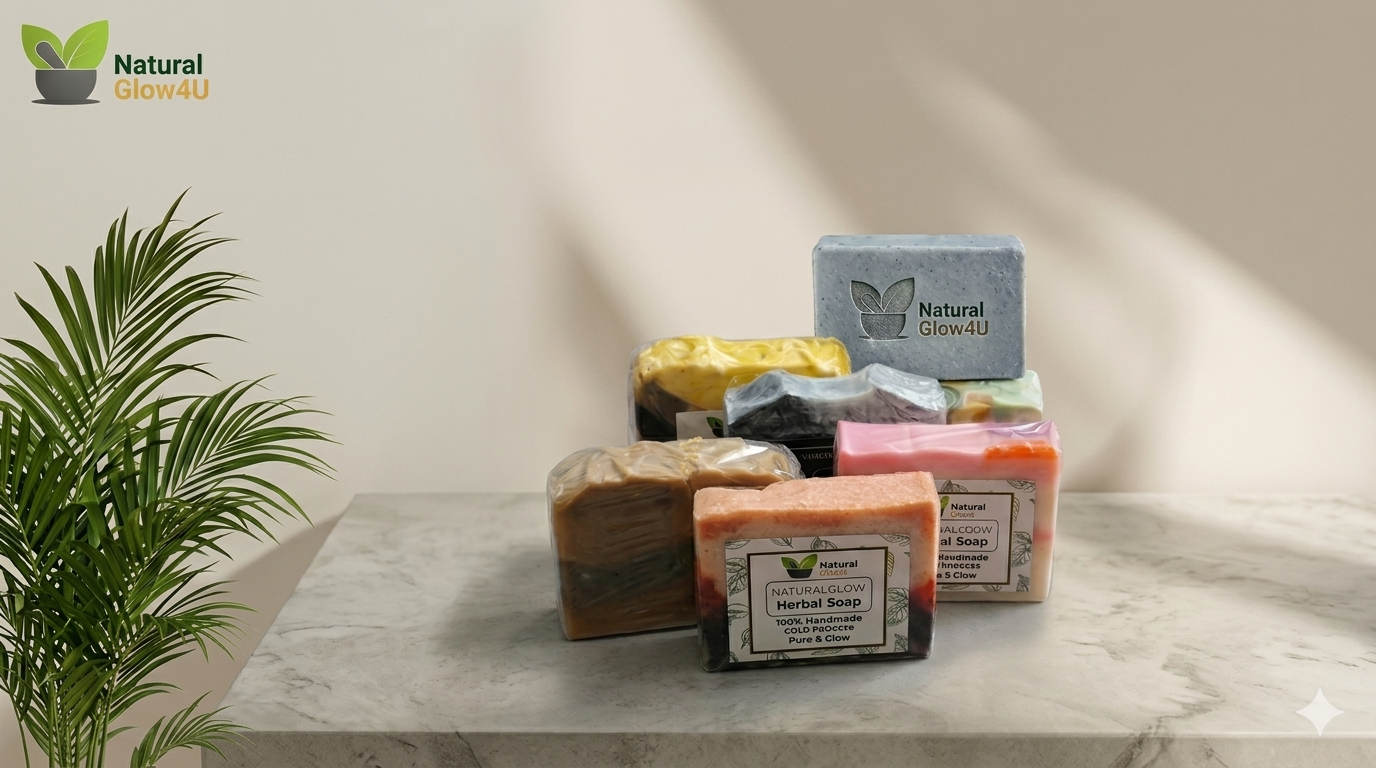
What Is Cold Process Soap? Ingredients, Benefits, and How It Differs from Melt & Pour Soap
Handmade soap has become increasingly popular among people looking for a more thoughtful approach to skincare.
If you've explored natural skincare products, you've probably come across the term Cold Process Soap.
But what exactly does it mean?
And how is it different from Melt & Pour Soap?
Here's a simple guide to help you understand the basics.
What Is Cold Process Soap?
Cold Process Soap is a type of handmade soap created through a process called saponification.
This happens when oils and lye solution combine and transform into soap.
Unlike some other soap-making methods, Cold Process Soap is made from scratch. The maker carefully selects oils, blends ingredients, pours the mixture into molds, and allows the soap to cure for several weeks.
The result is a handcrafted bar with its own unique characteristics.
Cold Process Soap is often appreciated for its simplicity, customization, and traditional soap-making process.
Basic Ingredients Used in Cold Process Soap
Although recipes vary, most Cold Process Soaps are made using four essential components.
1. Oils and Butters
These form the foundation of the soap.
Common examples include:
- Olive Oil
- Coconut Oil
- Castor Oil
- Sunflower Oil
- Rice Bran Oil
- Palm Oil
- Shea Butter
Different oils contribute different qualities such as cleansing, conditioning, or lather.
2. Water
Water helps dissolve the lye and allows the soap-making reaction to occur.
3. Sodium Hydroxide (Lye)
Lye is an essential ingredient in the soap-making process.
When properly used and fully cured, the lye reacts with the oils and is transformed during saponification.
4. Natural Additives
Many soap makers add ingredients such as:
- Neem
- Moringa
- Turmeric
- Activated Charcoal
- Essential Oils
- Botanical Powders
These ingredients are often chosen to enhance the user experience and create unique soap varieties.
Benefits of Cold Process Soap
Many people choose Cold Process Soap because of its handcrafted nature.
Some commonly appreciated qualities include:
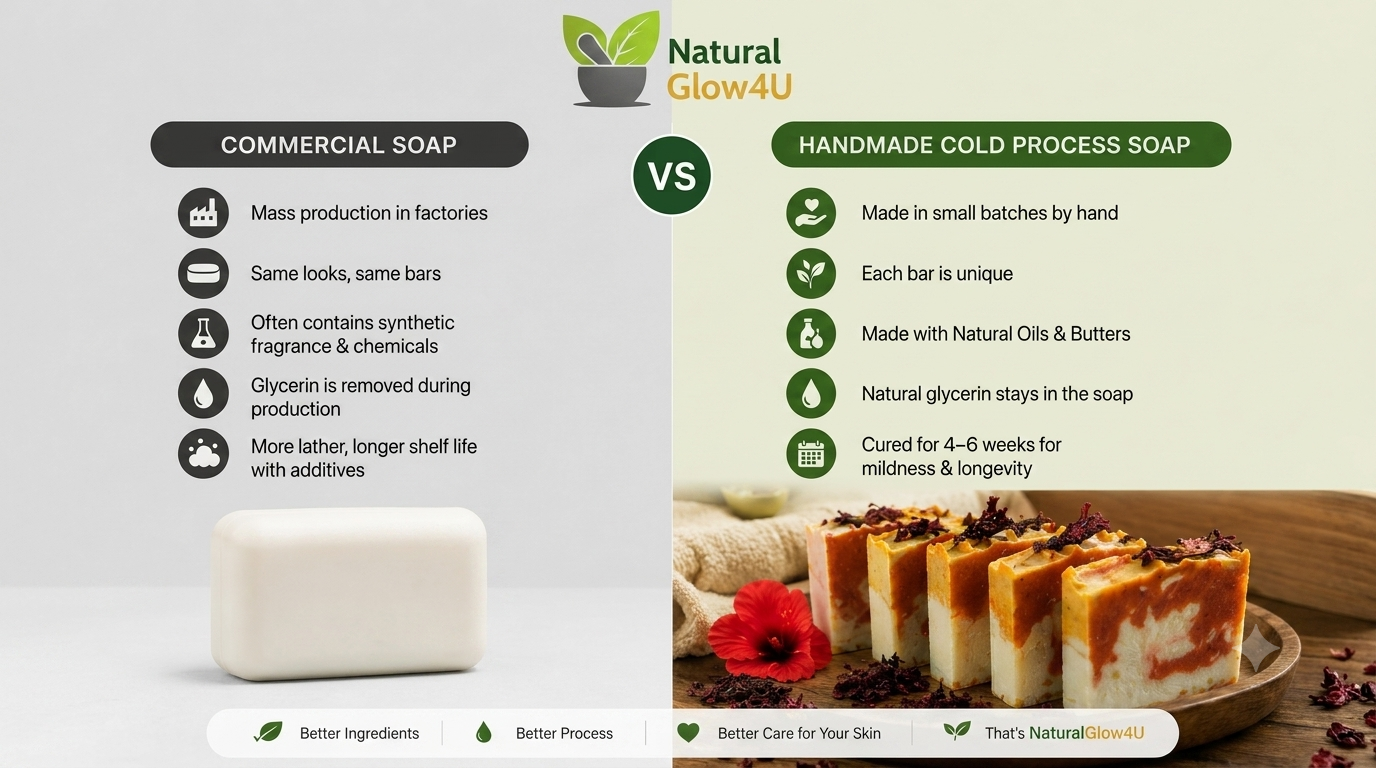
Naturally Occurring Glycerin
Glycerin is created naturally during the soap-making process.
It helps attract moisture and contributes to a pleasant cleansing experience.
Greater Ingredient Transparency
Because the soap is made from scratch, makers have greater control over the ingredients used.
Unique Handmade Character
Every batch reflects the maker's recipe, technique, and ingredient choices.
A Simpler Approach
Many people appreciate Cold Process Soap because it often contains fewer ingredients than heavily processed alternatives.
Cold Process Soap vs Melt & Pour Soap
Both types can create beautiful handmade products, but the production methods are different.
| Feature | Cold Process Soap | Melt & Pour Soap |
|---|---|---|
| Made From Scratch | Yes | No |
| Requires Saponification | Yes | Already Completed |
| Cure Time | 4–6 Weeks | Usually Ready Quickly |
| Ingredient Control | High | Limited by Soap Base |
| Customization | Extensive | Moderate |
Cold Process Soap
The maker creates the soap entirely from raw ingredients and controls the formulation from beginning to end.
Melt & Pour Soap
The soap base has already gone through the saponification process.
The maker melts the prepared base, adds colors, fragrances, or additives, and pours it into molds.
This makes Melt & Pour Soap easier and faster to produce.
Final Thoughts
Both Cold Process Soap and Melt & Pour Soap have their place in the world of handmade skincare.
The biggest difference lies in how they are made.
Cold Process Soap offers complete formulation control and a traditional handcrafted approach, while Melt & Pour Soap provides convenience and simplicity.
Understanding these differences can help you make more informed choices about the products you use every day.
At the end of the day, the best soap is one that fits your skin's needs and supports a skincare routine you enjoy using consistently.
Join the Conversation
Have you ever tried Cold Process Soap?
Share your experience in the comments—we'd love to hear what you enjoyed most about it.
```
💬 1 Comment
Leave a Comment